/prod01/channel_26/media/fbd2018/img/FBD_Logo.png)
FARM PROTECTION STORIES
Getting Hitched the Right Way
Safety and efficiency for the operator are priority when it comes to the design of modern tractors and implements today.
Quick attach Couplings
Quick- attach couplings and A frames have greatly helped operators to get implements attached to tractors in a safer manner. Safer practices will help to prevent injury or worse.
Driving
Driving a tractor with a heavy implement behind presents a number of challenges, both in the field and on the road. The most notable difference is the shifting of the distribution of weight on the tractor’s axles.
The front axle of the tractor will have less downward force and feel lighter to steer. Driving at high speed on bumpy fields will exaggerate this further, leaving little or no steering control in the tractor.
Front-mounted implements act as a good counterweight. The amount of stability required is dependent on the tractor size relative to the implement. Apart from the weight of the implement, when working on slopes the weight is shifting from wheel to wheel or from front to back. This can make the tractor unstable and cause a possible jackknife or the tractor to overturn. The best advice is use a tractor that is suited to the machine attached.
Size of Machine
The size of mounted machines has vastly increased over the last number of years. The lift capacity can be as high as 9 tonnes on the rear linkage arms of a medium-sized tractor. This affords operators greater potential to use wider, faster implements to get through work more efficiently.
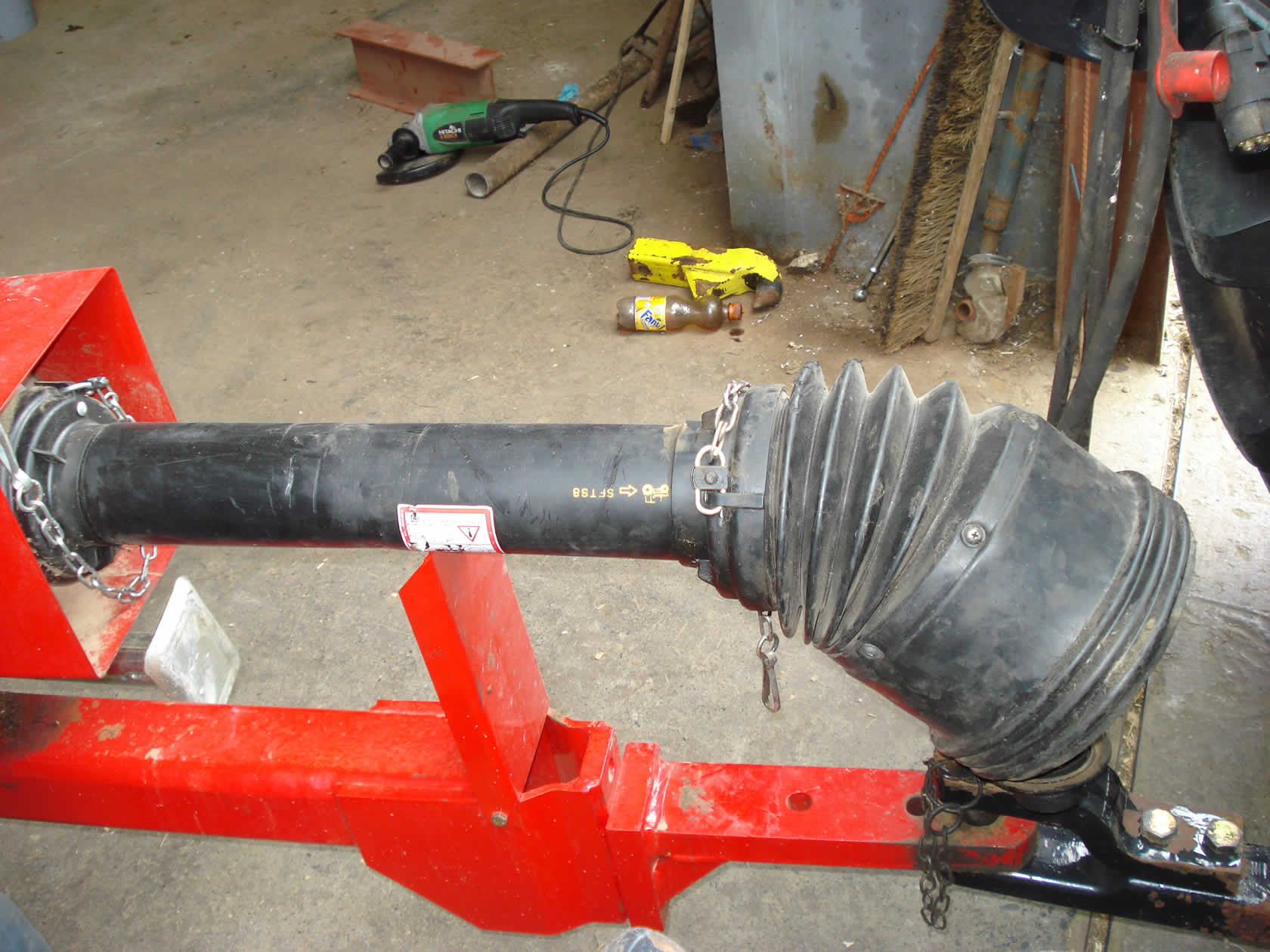
The mounting of these machines is closer to the tractor itself for better weight balance distribution. This reduces space for the operator when attaching the plough, fertiliser spreader or sprayer. As a result, this makes it difficult to attach Power Take-Off shafts or carry out adjustments on the toplink.
P.T.O. Safety
As the machine is closer to the tractor, there is a great danger of becoming trapped between the machine and the tractor. A tractor parked on a hill with a faulty brake may roll backwards when attaching, or the lift arms may be accidentally raised by another person in the cab. These are two scenarios that are not completely unimaginable on any family farm. The results of either scenario can be devastating. Therefore we need to avoid this.
Top Tips
Taking time to do the job is important. Where possible, leaving a tractor dedicated to a certain machine is ideal and avoids interchanging. Remember to ensure that there is no one in danger behind the tractor when reversing.
- Park all machinery on level ground.
- Adjust lift arms to ensure they are level, and use the correct category linkage balls.
- Use a steady slow gear for reversing in to attach the implement.
- If two people are working on attaching the machine, do not stand between the reversing tractor and implement.
- The lower links should be attached first, followed by the top link and then the P.T.O shaft.
- Never reach in to the cab to pull levers from the ground.
- When attaching the P.T.O shaft always turn off the tractor.
- Stand to the side of the lift arms when machinery is being hitched..
- Take time to inspect the clips and fasteners ensuring they are fitted correctly.
- Avoid using damaged components.
- Add weight to the front of the tractor if required.
Stop Taking Risks! Always Think Safety First.
/prod01/channel_26/media/fbd2018/img/tractor-on-farm.jpg)
/prod01/channel_26/media/fbd2018/img/Height,for,Hire,Farm,Roofs.jpg)
/prod01/channel_26/media/fbd2018/img/FBD-Child-Farm-Safety.jpg)
/prod01/channel_26/media/fbd2018/img/Silage,,(2).jpg)
/prod01/channel_26/media/fbd2018/img/field,on,a,sunny,day.jpg)
/prod01/channel_26/media/fbd2018/img/UCD,FBD,1.jpg)
/prod01/channel_26/media/fbd2018/img/underinsurance,blog,image.jpg)
/prod01/channel_26/media/fbd2018/img/FBD-cows.jpg)
/prod01/channel_26/media/fbd2018/img/Embrace,FARM.png)
/prod01/channel_26/media/fbd2018/img/Moorepark,Open,Day_Safety,Launch.jpg)
/prod01/channel_26/media/fbd2018/img/FBD-Tractor-Sunset.jpg)
/prod01/channel_26/media/fbd2018/img/Farm-Quad-Sheep.jpg)
/prod01/channel_26/media/fbd2017/dist/media/winter-snow-roads.jpg)
/prod01/channel_26/media/fbd2018/img/farm-equipment-and-machinery.jpg)
/prod01/channel_26/media/fbd2018/img/FBD-fire-alert.png)
/prod01/channel_26/media/fbd2018/img/Electrical,Safety,on,Farm.jpg)
/prod01/channel_26/media/fbd2018/img/quad-safety.jpg)
/prod01/channel_26/media/fbd2018/img/last-minute-slurry-safety.jpg)
/prod01/channel_26/media/fbd2018/img/getting-hitched-the-right-way-2.jpg)
/prod01/channel_26/media/fbd2018/img/safety-around-the-milking-parlour.jpg)
/prod01/channel_26/media/fbd2018/img/silage-safety.jpg)
/prod01/channel_26/media/fbd2018/img/safety-working-with-sprays.jpg)
/prod01/channel_26/media/fbd2018/img/national-farm-safety-week.jpg)
/prod01/channel_26/media/fbd2018/img/gear-up-for-a-safe-winter.jpg)
/prod01/channel_26/media/fbd2018/img/farm-safety-items-covered-in-TAMS-II.jpg)
/prod01/channel_26/media/fbd2018/img/safety-at-calving.jpg)
/prod01/channel_26/media/fbd2018/img/safety-at-lambing.jpg)
/prod01/channel_26/media/fbd2018/img/safety-at-breeding.jpg)
/prod01/channel_26/media/fbd2018/img/livestock-safety-header.jpg)